
The Subjunctive. Seriously?
I Can Pronounce “Via Montenapoleone” but Not This?
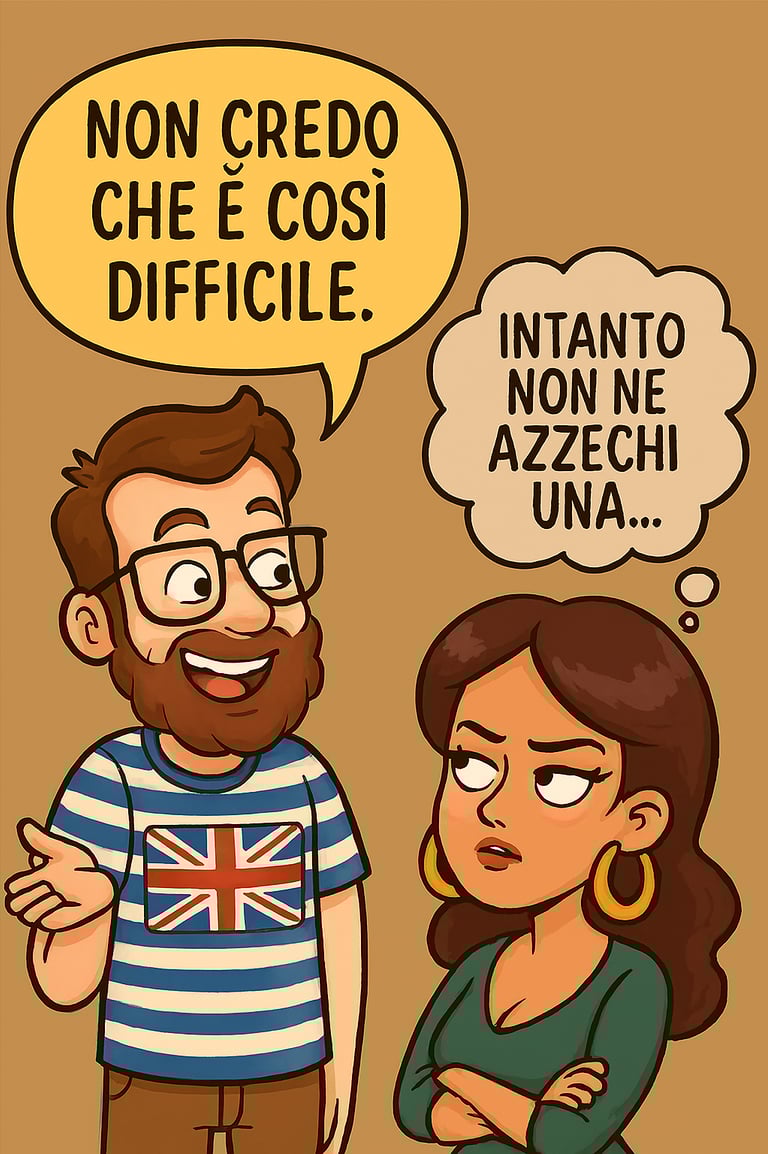
If you’ve ever felt like a clueless tourist — despite your 1,500 hours of Italian lessons — when choosing between Penso che è disgustoso and Penso che sia disgustoso, you’re in the right place.
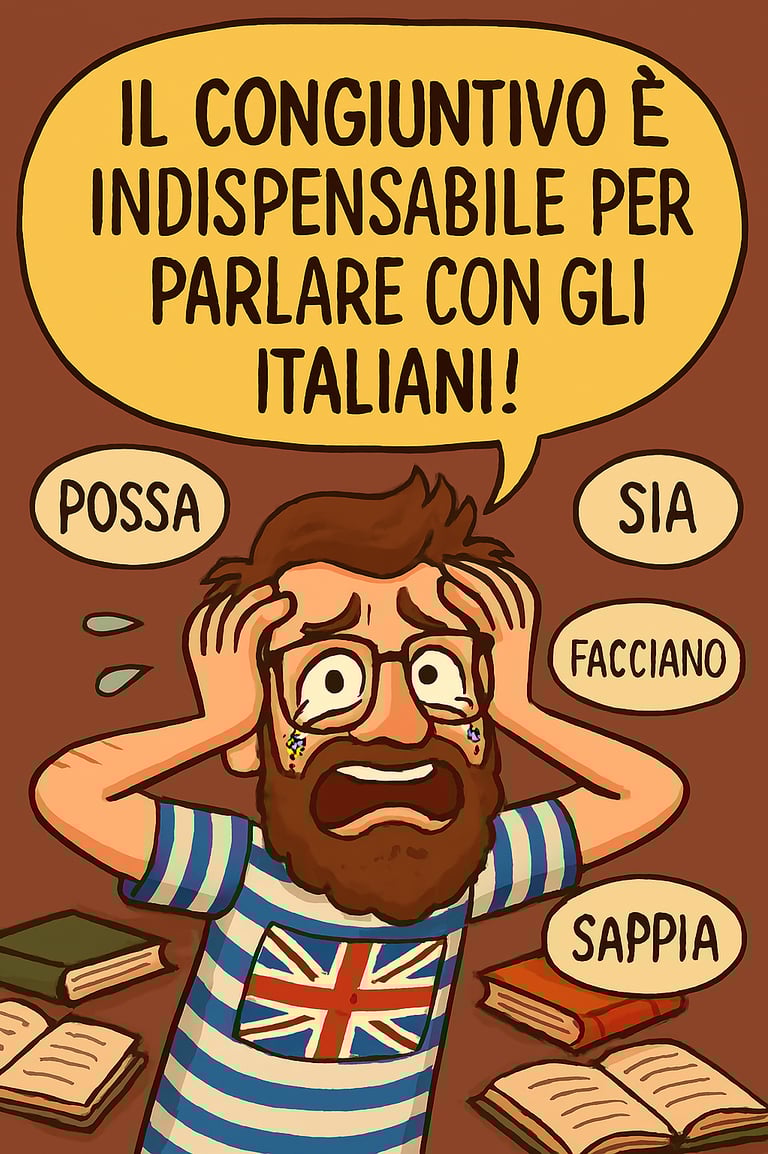
I mean, come on. I know every ingredient of a proper carbonara. I can pronounce the names of Milan’s shopping streets perfectly. I can even tell the difference between passato remoto and passato prossimo.
But this damn subjunctive? It just refuses to enter my brain.
Because let’s be honest: the subjunctive is a mystery. Often even for us Italians, descendants of the Romans. So imagine what it feels like for an English speaker whose brain runs on a completely different logic.
And here it is: the X factor is logic.


And since logic needs frameworks (yes, frameworks — not verb tables!), I created a workbook for every Mr. Smith who panics in front of that infamous Italian choice.
A simple, friendly workbook designed around the way your English-speaking brain actually processes information, guiding you straight to the aha! moment of the subjunctive.
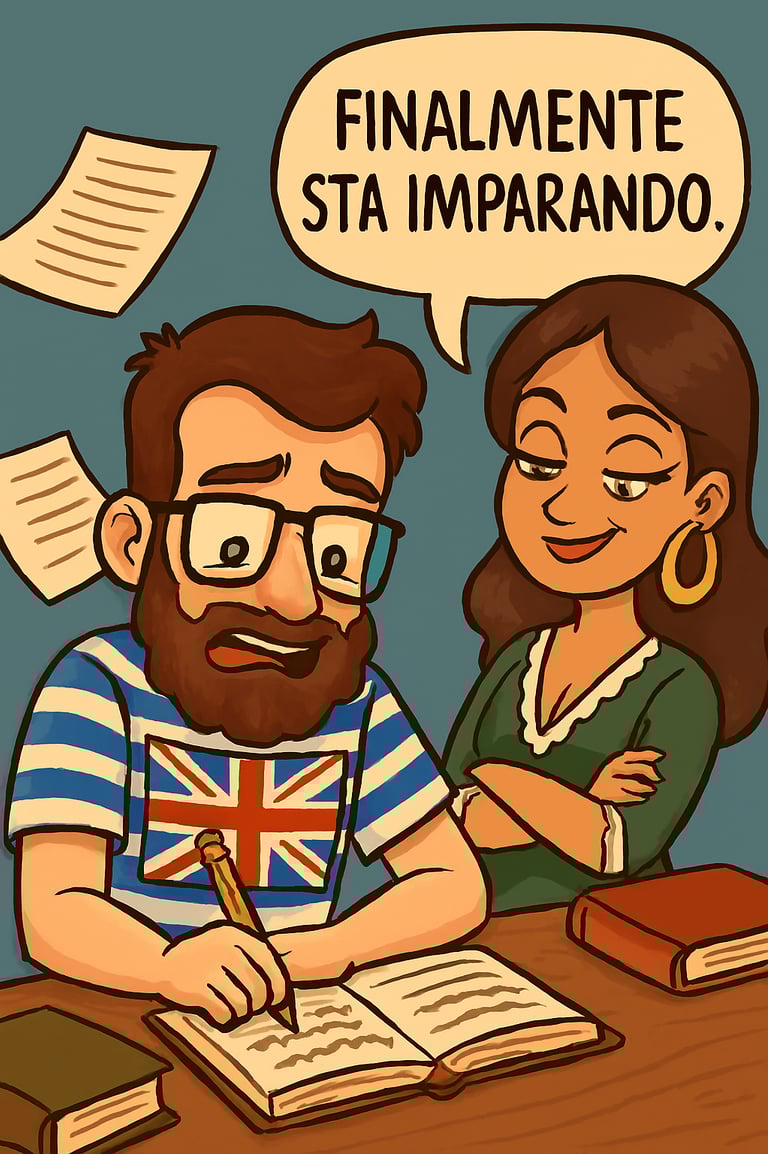
The 5 Traps
There are five traps you fall into over and over — the ones that push you, by pure instinct, to blurt out the verb in the present tense instead of the subjunctive.
There are five visual frameworks that map out these Italian traps.
And there are five areas where you’ll finally discover:
how the Italian brain works
what real-life conditions trigger the subjunctive
why your instinct keeps choosing the wrong form
and how to rewire that instinct through progressively challenging language tasks
All with Mr. Smith at your side, navigating the choppy waters of the most feared beast in Italian grammar.
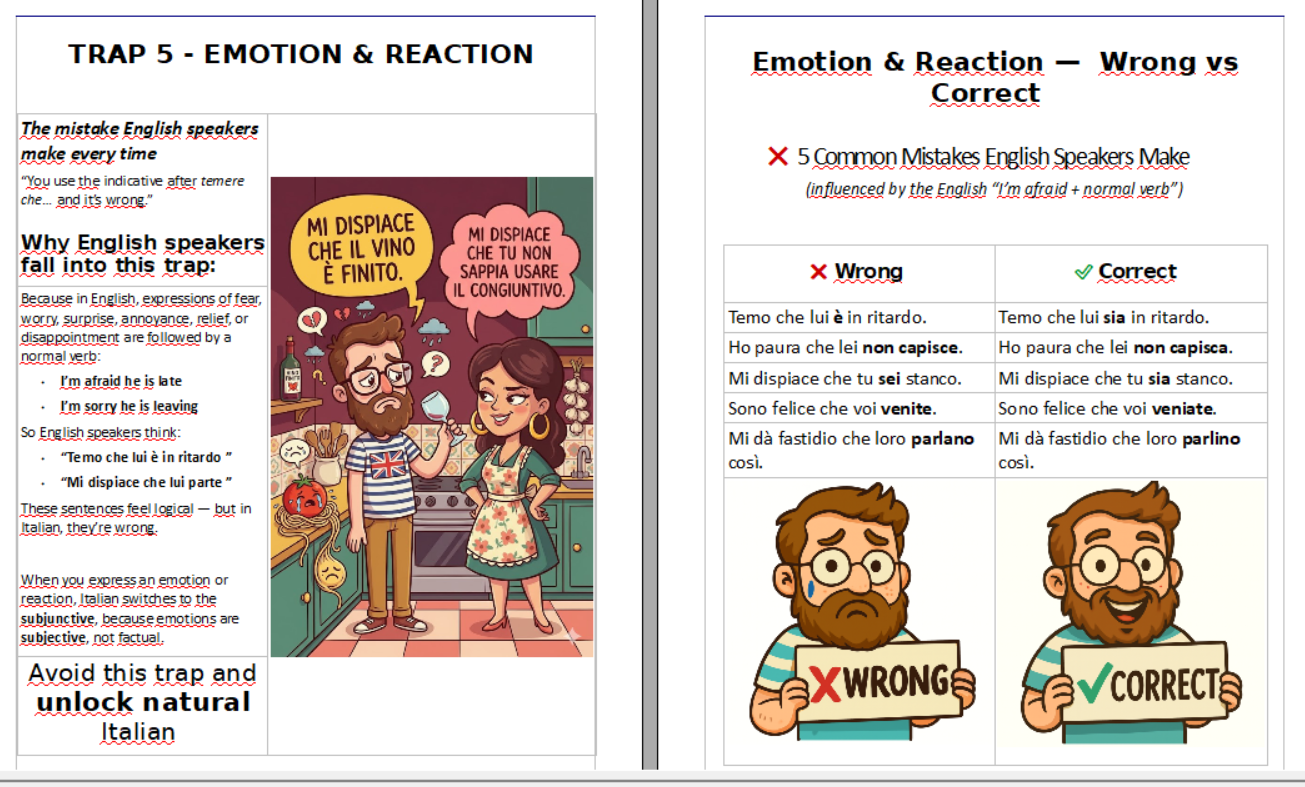
And since logic needs frameworks (yes, frameworks — not verb tables!), I created a workbook for every Mr. Smith who panics in front of that infamous Italian choice.
A simple, friendly workbook designed around the way your English-speaking brain actually processes information, guiding you straight to the aha! moment of the subjunctive.